Transforming veteran support with AI-powered search
Department of Veterans' Affairs
Health

Australia's veteran community and their families often struggle to navigate complex government systems when seeking support. The Defence and Veteran Suicide Royal Commission highlighted how difficult it can be for veterans to access the services they need, particularly during challenging times. Often described as an invisible challenge, the complexity of finding the correct information and support can leave veterans and their families feeling frustrated and uncertain about where to turn for help.
Removing obstacles between veterans and the support they need
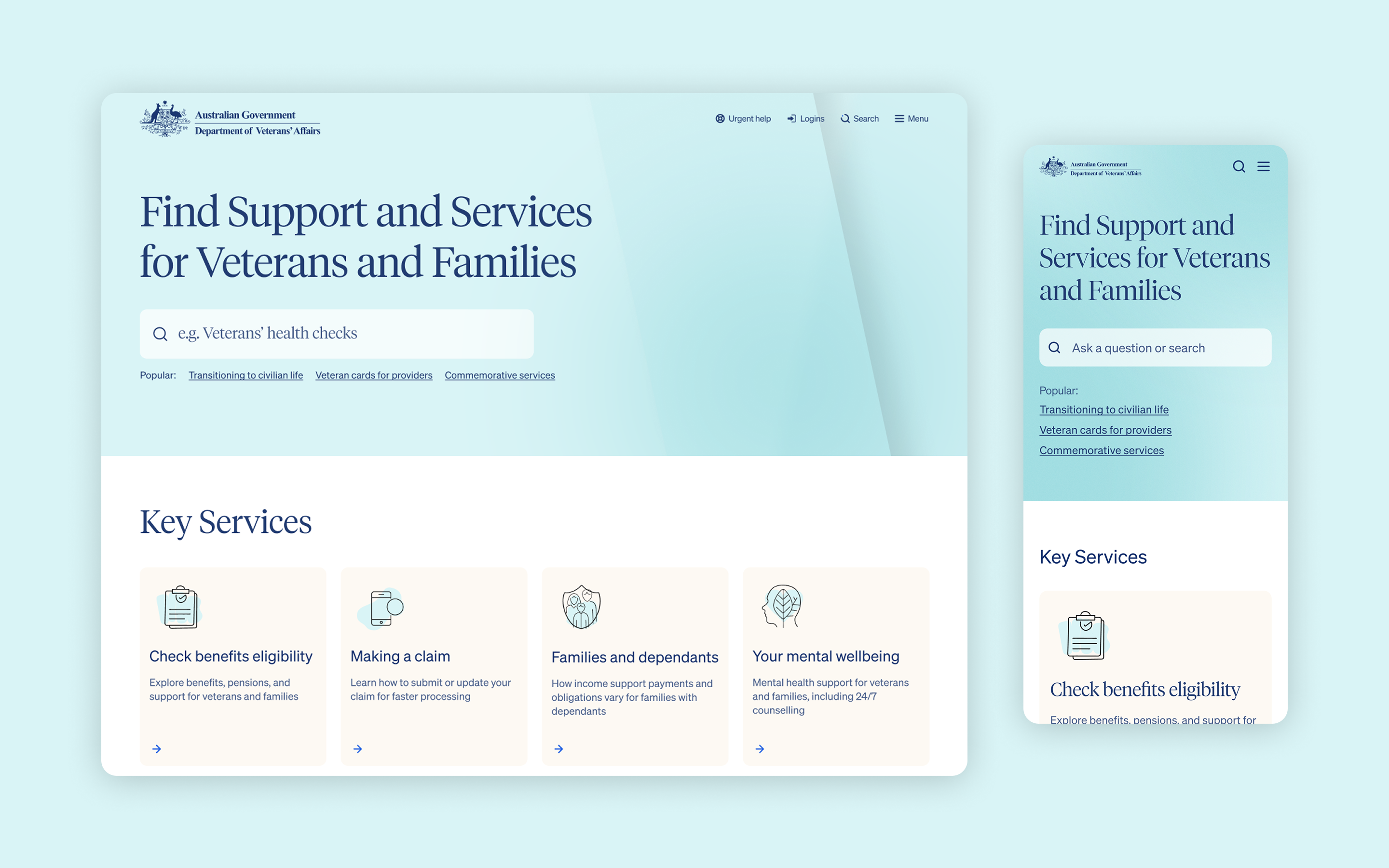
The Royal Commission identified opportunities to enhance the way veterans access digital services and support. In response to these findings, DVA recognised that their website's navigation structure, content organisation, and complex language could be redesigned to better serve veterans, their families, and the healthcare providers supporting them.
When DVA came to Pollen with this critical challenge, we understood the urgency. This wasn't just about improving a website, it was about removing barriers that could save lives.
Through extensive research with veterans, families, and service providers, we identified critical information barriers - moments when people desperately needed support but were met with frustration instead of help.
Our research revealed critical barriers including information buried within complex navigation that reflected DVA's internal structure rather than user needs, broken links and outdated content that destroyed trust, jargon-heavy language when clarity was essential, an ineffective chatbot providing generic responses instead of personalised guidance, and unclear eligibility criteria that left families uncertain about accessing support.
Creating AI-powered pathways to critical information
While extensive content resources are available on DVA.gov.au and related websites, such as OpenArms.gov.au, this valuable information is often difficult to find and contains complex jargon. The challenge was clear: how could we make this trusted knowledge easily discoverable while transforming it into language that veterans and their families could understand?
In addition to a refreshed website experience and information architecture, we also developed an AI-powered search that surfaces the right content and translates complex information into simple, accessible answers. The new AI search aims to meet people at their "point of critical need", whether they're veterans facing a crisis, families trying to understand their entitlements, or providers seeking information during consultations, delivering exactly the right information. The platform bridges the gap between complex government information and the clear answers DVA’s audiences need.
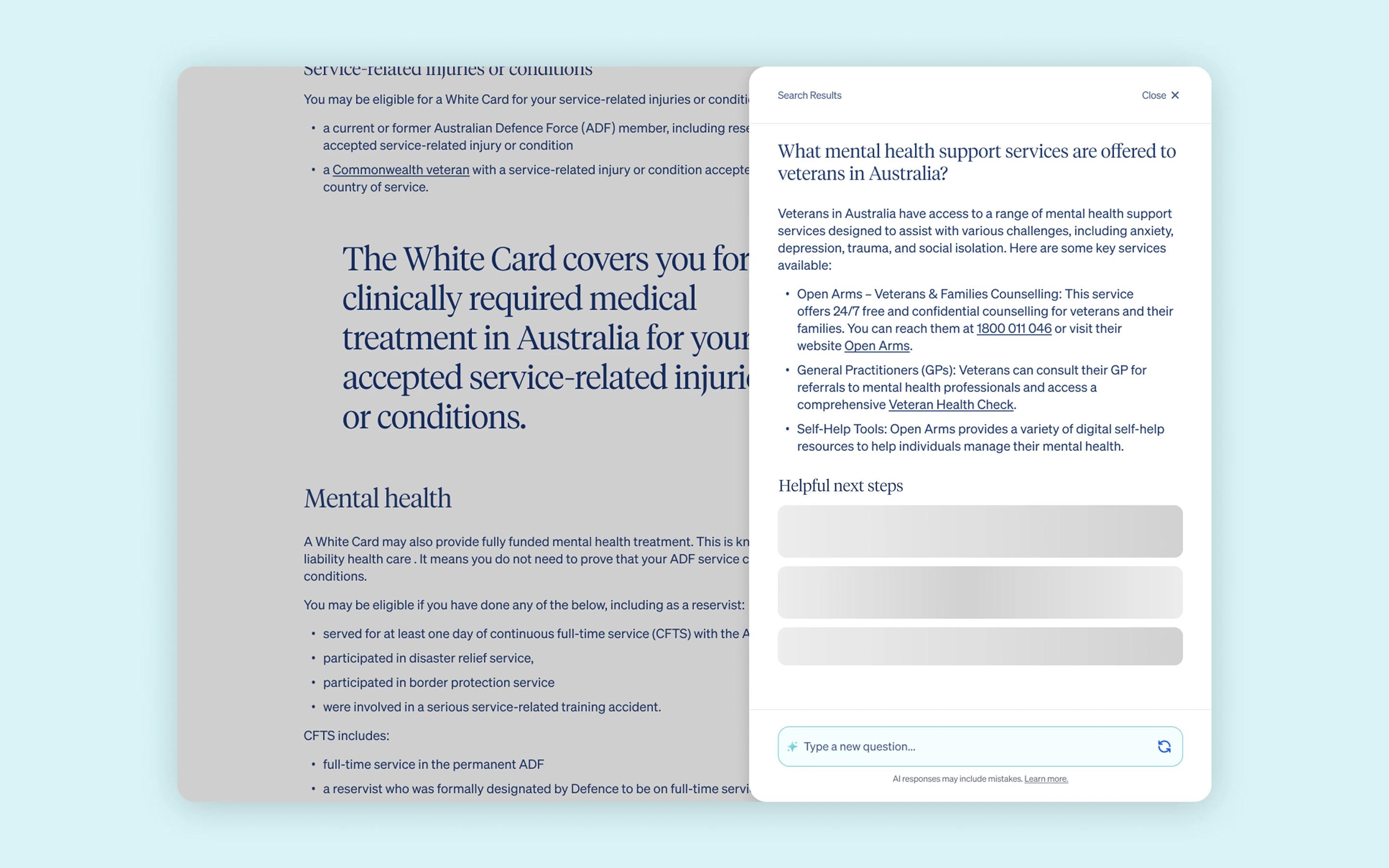
AI-Powered Search with compassionate, trauma-aware responses
Trauma-informed response generation was essential for DVA. Advanced natural language processing enables AI Search to not only understand what people are asking, but also identify questions that may indicate a crisis or urgent situation. When potentially life-threatening circumstances are detected, the system prioritises directing users to immediate support resources. For standard queries, the AI Search can interpret questions asked in everyday language such as "How do I get help with my back injury from service?" or "What financial support am I entitled to?" and connect them to specific, actionable information.
There's no need to understand government terminology, navigate complex site structures, or know which forms to complete. People can ask questions the way they naturally think about their problems, and the AI Search translates this into precise, trustworthy guidance.
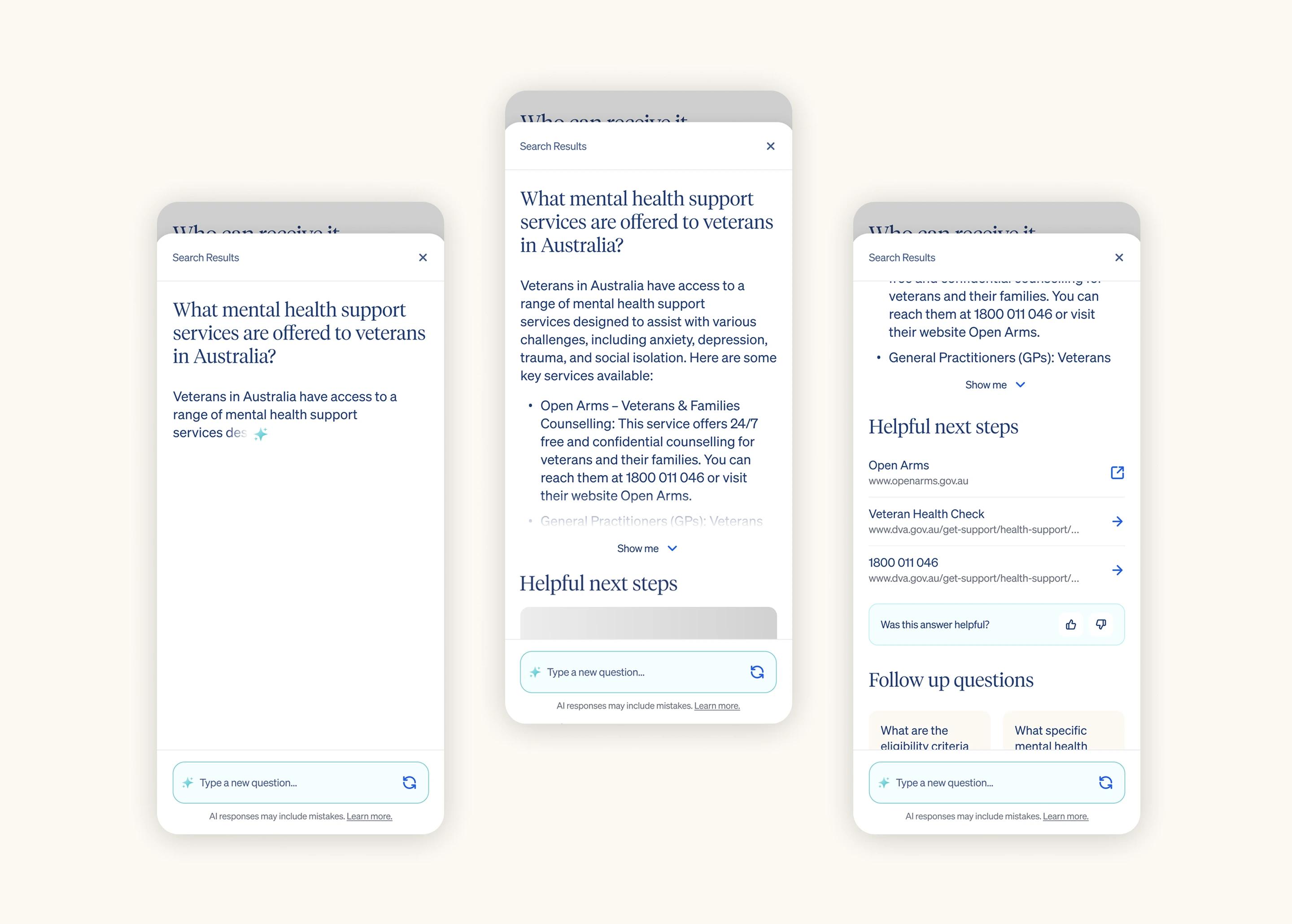
Building trust through secure, authoritative information retrieval
It's critical that the AI Search balances information accessibility with verified and accurate responses. To achieve this, it's powered by Adaptive Retrieval, a process far more intelligent than standard search. For every query, the system runs both keyword (lexical) and conceptual (semantic) searches in parallel, then uses Dynamic Hybrid Weighting to blend the results for maximum relevance.
The system intelligently decides how much to trust each search type by analysing the query itself. A question containing a specific identifier or quoted phrase will have its lexical weight increased to ensure precision, while a longer, natural language question will have its semantic weight increased to find the most conceptually relevant answers.
This is all underpinned by enterprise guardrails, including automated PII redaction before processing, and multi-layer moderation to ensure safe interactions. This approach sets the DVA AI Search apart from generic chatbot solutions.
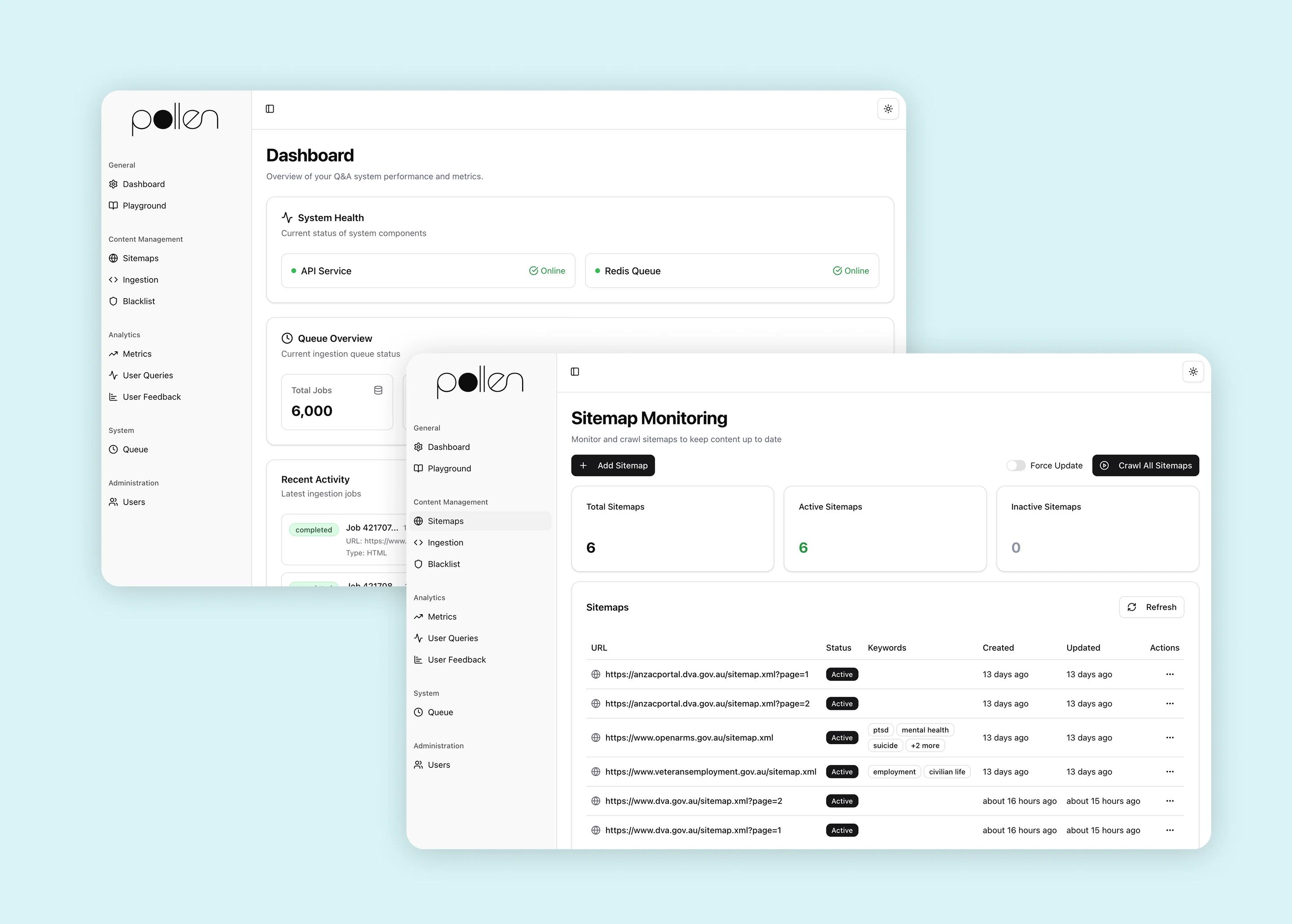
It's just the start of digital transformation in veteran services
We've developed a comprehensive measurement framework built on the platform's native observability features, including end-to-end tracing and structured logs. This allows us to move beyond simply tracking search patterns; we can analyse query performance, retrieval quality, and successful task completion with precision. This data enables continuous improvement, delivering increased self-service interactions and faster access to life-saving support.
We're proud to work with DVA, using cutting-edge AI technology to ensure veterans and their families can access the support they need, when they need it most.