On your marks, get set, go: Our guide to UX/UI product sprints
Pollen design team
Updated Jul 13, 2026

A product sprint is a fast-moving, collaborative design process that runs over two weeks. It exists to rapidly explore, learn and solve a single problem or a contained set of problems. Its value lies in speed. It condenses months of traditional human-centred design into two weeks, so you can put working solutions in front of real customers before committing serious build budget.
In this article we'll explain the benefits of sprinting, help you decide whether a product sprint is the right framework for your next project, and share our tips on setting your sprint up for success.
The benefits of a product sprint
Move fast. We consolidate weeks or months of design into a highly focused two-week project to get your product off the ground faster. AI prototyping tools like Figma Make, Lovable and Claude can turn a sketched solution into an interactive prototype in hours rather than days, so we're testing with customers by the middle of week one and revising the same day feedback lands.
Kill ideas quickly. A surplus of ideas is only useful if you're willing to cull it. A sprint gives you customer evidence to stop spending time on things they don't want and double down on the things they do.
Test the real thing, not a picture of it. Because AI-assisted prototypes behave like working software, customers respond to how a solution actually feels, not how it looks in a static screen. The feedback is more honest and the decisions that follow are better grounded.
Spend time designing, not documenting. The team communicates daily, shares thinking and builds on ideas together. Less time on specification documents and big sign-off moments, more time bringing proven ideas to life. AI absorbs a good share of the note-taking and synthesis grunt work too. It compresses the making, but not the deciding. Choosing the right problem, aligning the team and listening properly to customers is still where a sprint earns its keep.
Sounds great? It is. But before jumping in, check the product sprint is the right framework for the problem you want to solve.
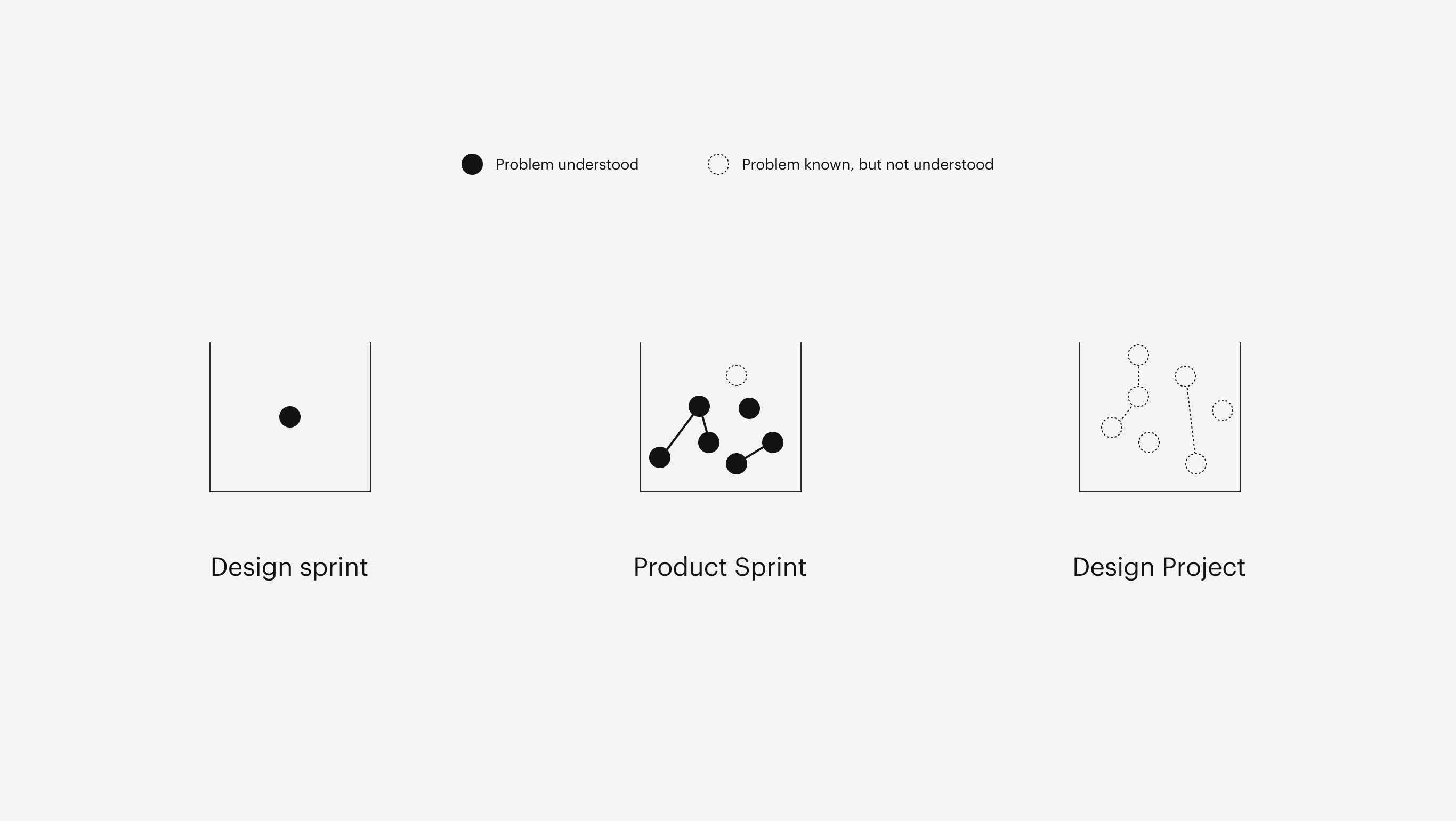
Knowing when to sprint
Fast and cheap is alluring, but a sprint isn't the go-to framework for every design problem. Three questions to ask first.
Do you and the team know the audience and the problem well?
A sprint assumes a discovery phase is already done. You've spoken to customers, you understand their needs, and you've dug into the root of the problem. If you're still learning about the problem, do that research first. A problem well stated and understood is a problem half solved.
The strongest product teams talk to customers every week as a matter of habit. A sprint isn't a substitute for that ongoing discovery. It's the focused intervention you run when a decision is too big or too urgent for the steady drumbeat.
Are you trying to tackle multiple complex or unrelated problems?
Trying to solve everything at once spreads the focus too thin. If you have several big problems, prioritise the most important one, then run a few targeted sprints or consider a longer design project. Focus and constraint drive innovation. We're aiming for a Tesla, not The Homer.
If the decision is earlier and smaller, a shorter format might fit better. A two-day sprint works when you're choosing a direction rather than designing a product. The two-week product sprint is for when there's genuine design and validation work to do.
Are you trying to design a complete, development-ready product?
The goal of a sprint is testing whether customers want the thing. AI prototypes can look deceptively close to finished products, but they're validation tools, built to be thrown away. Expanding the sprint to cover detailed, production-ready design pulls focus from customer problems to feasibility and documentation, and you lose the speed that made the sprint worthwhile. Ship the learning, then scope the build.
If you know your customers, have a contained and well-researched problem, and want evidence before you build, a product sprint is a great way to get cracking.
Remember to stretch
Preparation before a sprint matters as much as the sprint itself. Our tips.
- Expect to move fast. Decisions come quickly and not every avenue, feature and screen gets explored. You trade scenery for arrival time.
- Write a contained sprint definition. Something like "by the end of this sprint we will have a validated solution to X problem so that Y can...". It sets the direction and describes what success looks like.
- Keep the team small and diverse. Fewer than eight people, with a mix of skills, knowledge and decision-making authority. Don't try to include everyone.
- Agree your toolkit up front. Decide which AI prototyping tools the team will use, who drives them, and what happens to the prototype after the sprint ends.
- Schedule daily check-ins to share progress, clear blockers and ask questions.
- Clear the calendar. Momentum matters, so protect the two weeks and cut external distractions.
- Remove presentations and approval milestones from inside the sprint. Present once, clearly, at the end.
Product sprints are a fast, focused, and relatively inexpensive way to answer the question every product team eventually faces. Do customers actually want this? They're not the cure-all for every problem. Spend the time to make sure it's the right framework, invest in the preparation, and you'll get two weeks of work that saves you six months of building the wrong thing.
Thinking about a sprint for your product? Get in touch.