Inclusive by Design - better products, bigger audiences
Carmine Mastrantone & Lorraine Chung
Updated Jul 12, 2026
One in five Australians lives with disability. That's 5.5 million people, up from 17.7% of the population in 2018 to 21.4% in the latest ABS figures. Add everyone navigating a second language, low literacy, patchy connectivity or an unfamiliar device, and "edge cases" start to look a lot like the mainstream.
Every design decision either includes those people or excludes them. Inclusive design is the practice of making that choice deliberately, from the first sketch, rather than discovering the exclusions after launch.
The business case is bigger than most teams realise

Research by PwC for the Centre for Inclusive Design found that products designed with edge users in mind can reach up to four times their intended audience. The same research put the annual disposable income of the five million Australians locked out of products and services by poor design at more than $40 billion.
So inclusive design isn't a compliance line item or a charitable gesture. It's market expansion. The organisations that treat it that way consistently build better products for everyone, because designing for someone using a screen reader, or reading at a year 5 level, forces a clarity that benefits every user.
The bar has moved
If your accessibility approach was set before 2024, it's out of date. Three things have changed.
WCAG 2.2 Level AA is the current technical baseline. The Australian Human Rights Commission’s April 2025 guidelines recommend that organisations conform to WCAG 2.2 at Level AA as a minimum. WCAG provides a necessary benchmark, but conformance alone does not guarantee that a service gives people equal access or meets every obligation under the Disability Discrimination Act.
Obligations now extend beyond websites. The Commission's guidance covers mobile apps, SaaS platforms and AI tools. If your customers interact with it, it needs to be accessible.
Government has raised its own standard. The Australian Government’s Digital Service Standard requires teams to know their users and leave no one behind. Its mandatory Digital Inclusion Standard sets expectations for accessible and inclusive government services, including new services and existing public-facing services. If you design or build digital services for government, these requirements may flow into procurement, contracts and acceptance criteria.
Who you're designing for
Exclusion isn't one audience, and it isn't always permanent. A person with one arm, a person with a broken arm and a person holding a baby all face the same interaction problem. Designing for the permanent case fixes the temporary and situational ones for free.
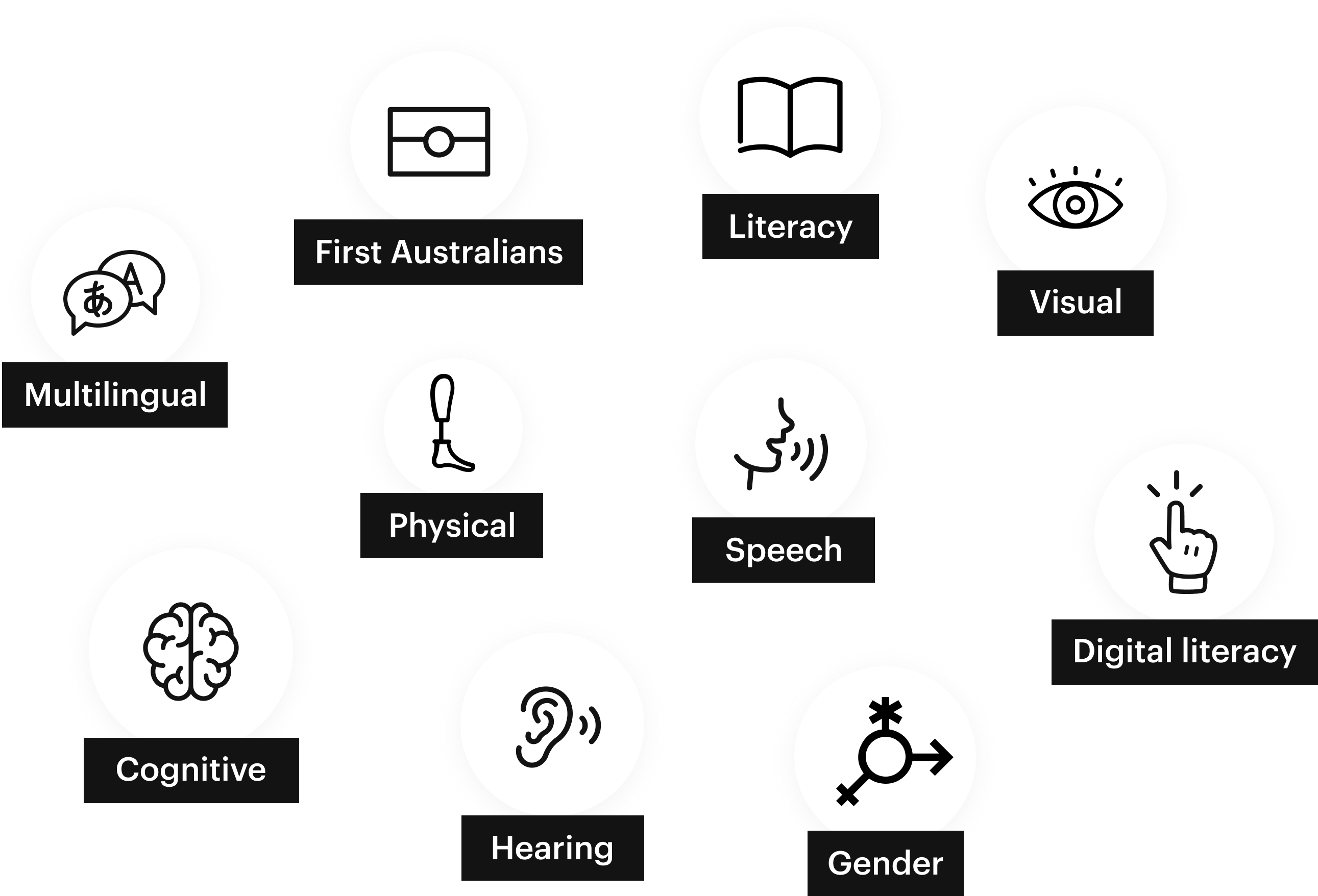
The dimensions we consider on every project:
Vision. Colour blindness, low vision and blindness.
Hearing. Hard of hearing and deafness.
Cognitive. ADHD, autism, dyslexia and memory differences.
Physical. Limb difference, paralysis and tremors.
Speech. Non-speaking users and speech differences, increasingly relevant as voice interfaces spread.
Language and culture. Culturally and linguistically diverse audiences and people using English as a second or third language.
Aboriginal and Torres Strait Islander peoples. Designing with communities, not just for them, and following cultural protocols around imagery, names and Country.
Digital access and confidence. Devices, data, connectivity and skills.
Literacy. Around 44% of Australian adults read at a level where dense copy is hard work. Plain language is an accessibility feature.
The principles we work by
Start inclusive, don't retrofit. Accessibility bolted on before launch costs more and delivers less. Built in from the first design decision, it costs almost nothing extra.
Design with users, not just for them. Automated WCAG scanners catch only a share of real barriers. We test with people who have a range of access needs, because that's where the actual problems show up. On the NSW Government Design System, that meant usability testing with participants with colour blindness, blurred vision, memory issues, ADHD and autism.
Constraints sharpen creativity. Thinking inclusive first clarifies your objectives. Content, interface and technology become the sandbox for creative work, not a fence around it.
Make the next action obvious. Use clear hierarchy, meaningful headings and restrained calls to action. Design for small screens, zoom and reflow, then test across devices, input methods and assistive technologies.
Treat AI as both a tool and a surface. AI can now draft alt text, check contrast and flag barriers at scale, and we use it that way. But AI-powered features are also products in their own right, and the AHRC guidance makes clear they carry the same accessibility obligations as everything else you ship.
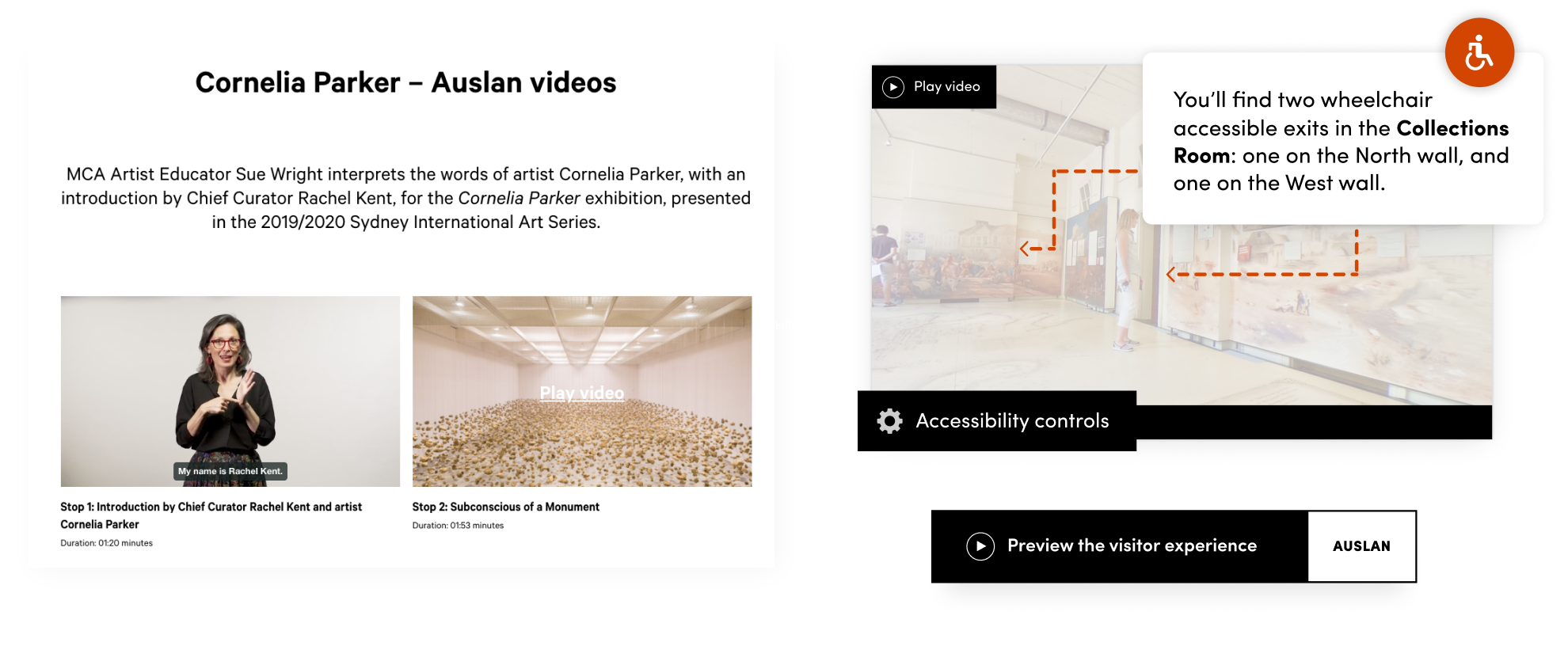
What this looks like in practice
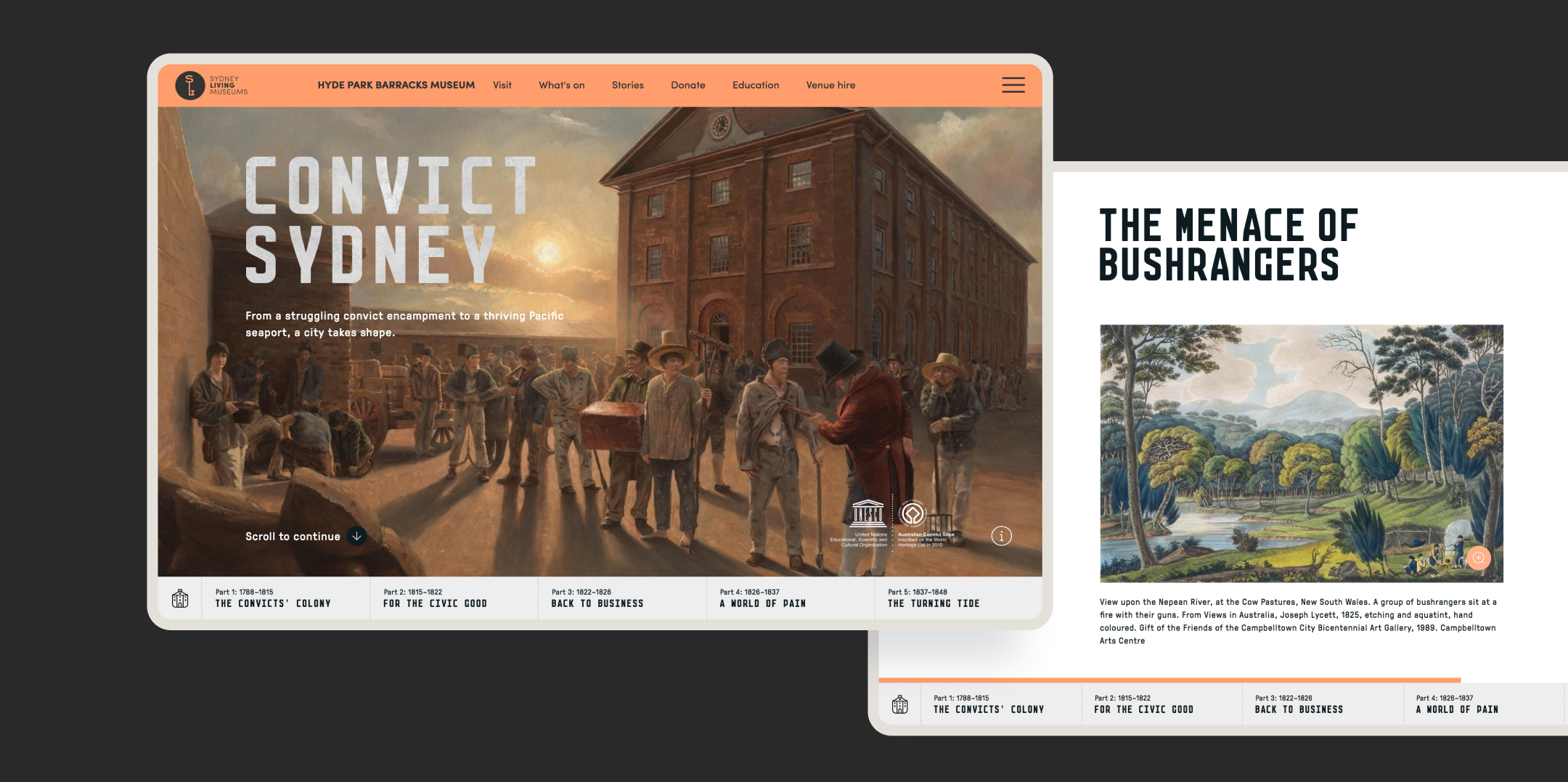
Telling Sydney’s History
With Sydney Living Museums we created a Digital Inclusivity Plan for the Hyde Park Barracks Museum, so a wider audience could connect with the stories of Sydney's past.
Creating design consistency across the NSW government
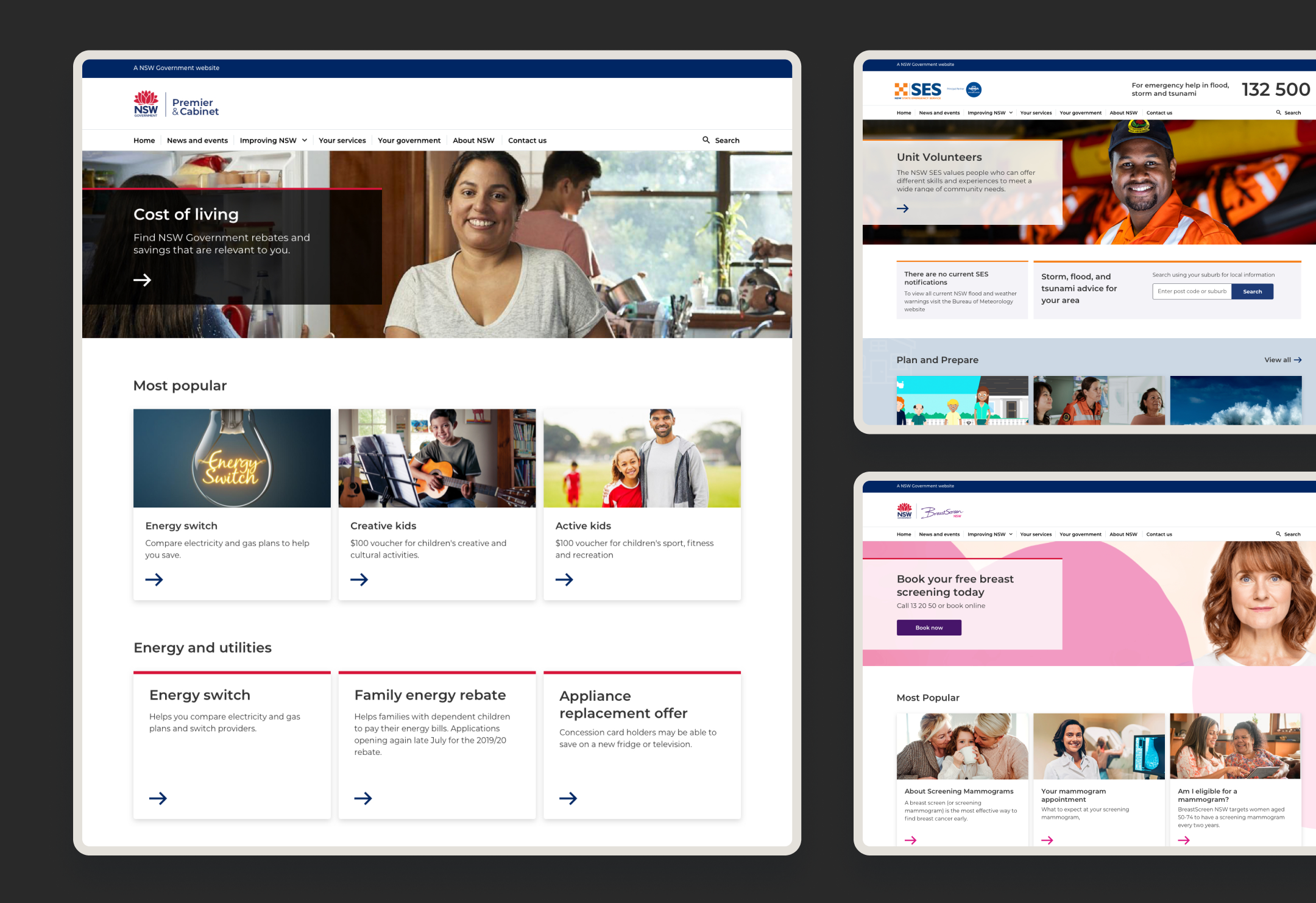
The Department of Customer Service engaged us to resolve inconsistencies in their digital brand guidelines. We pressure tested the resulting Design System with users with a range of disabilities, and it now gives departments across NSW a consistent, accessible starting point.
Where to start
You don't need a full rebuild to begin. An accessibility audit against WCAG 2.2 will tell you where you stand. Test your priority journey with disabled participants whose access needs, devices and assistive technologies reflect the service. The appropriate sample depends on the diversity of the audience, the complexity of the journey and the consequences when someone cannot complete it. From there, inclusive design becomes a habit rather than a project.
If you'd like to know where your product or website stands, we can help you find out.